
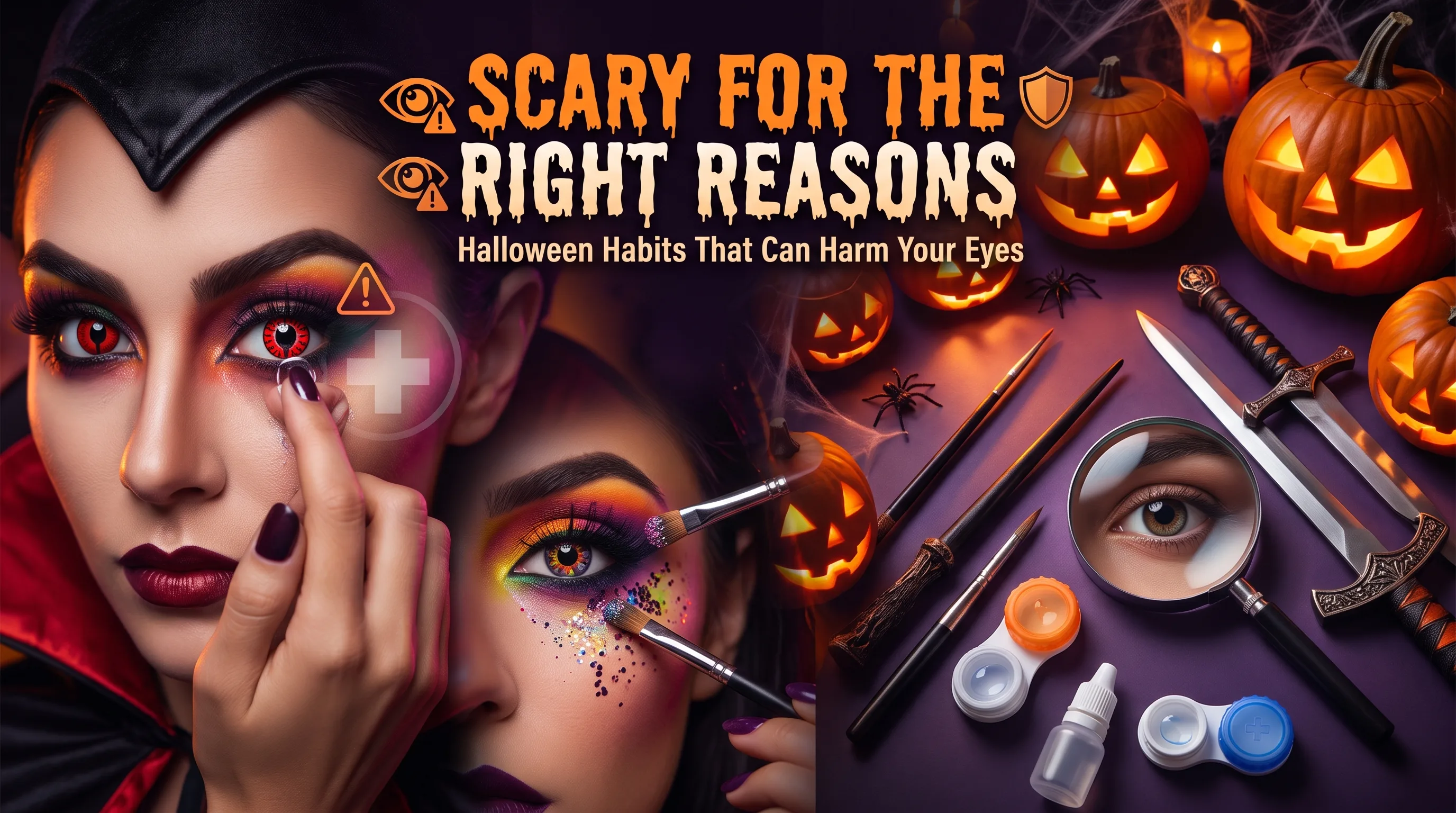
Halloween is all about dramatic costumes, spooky makeup, and transforming your look. But some popular Halloween accessories can create real risks for your eyes.
From decorative contact lenses to costume props, here are a few Halloween habits worth thinking twice about.
Decorative Contact Lenses
Want vampire eyes, cat eyes, or a completely different eye color for Halloween? Decorative contact lenses can complete a costume, but they’re not risk-free.
The FDA and CDC emphasize that all contact lenses—including decorative lenses—require a prescription and proper fitting. Lenses purchased without a prescription may not fit correctly and can increase the risk of corneal scratches, infections, decreased vision, and other serious complications. (FDA)
If you’re planning to wear decorative contacts:
- Get an eye exam and prescription.
- Purchase lenses from a seller that requires a prescription.
- Follow your eye care professional’s instructions for wearing and caring for them.
- Never share contact lenses.
If you experience persistent redness, eye pain, discharge, or decreased vision, remove the lenses and contact an eye care professional promptly. (FDA)
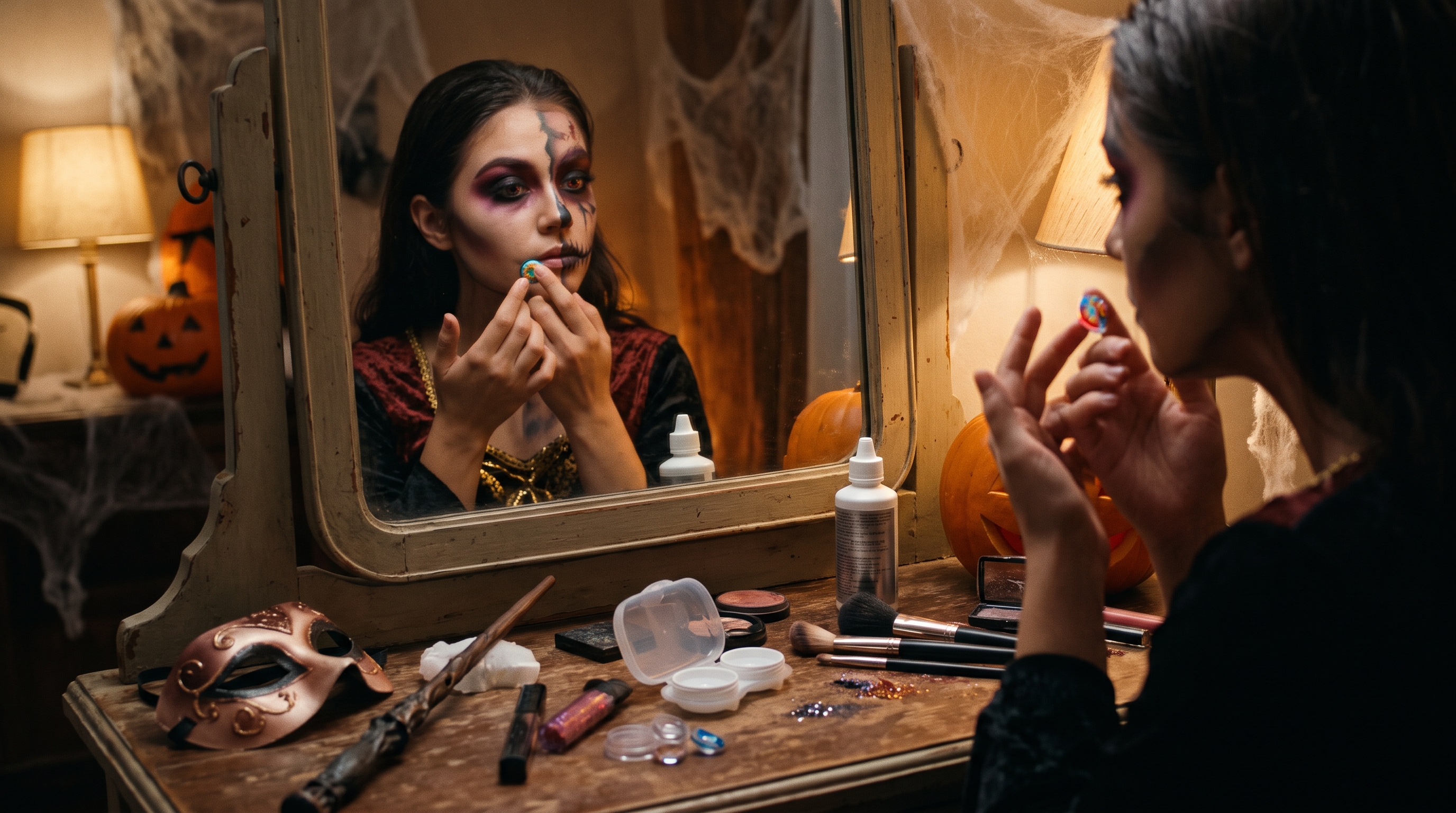
Use Eye Makeup Carefully
Halloween makeup can create some impressive effects, but not every cosmetic is appropriate for use around the eyes.
The FDA recommends using cosmetics near the eyes only when they’re specifically intended for that area. Eye cosmetics should also be kept clean and should not be shared, since contamination can contribute to eye infections. (FDA)
If you’re trying a new Halloween makeup product, the FDA also recommends testing it ahead of time for signs of irritation or an allergic reaction. (FDA)
Keep products that aren’t intended for use around the eyes away from them.
Think Twice About Costume Props
Swords, wands, pointed accessories, and other costume props can become eye hazards—especially in dark or crowded environments.
Tufts Medicine recommends avoiding sharp or pointed costume accessories that could accidentally cause an eye injury. (Tufts Medicine)
Whenever possible, choose soft, rounded, or flexible accessories, particularly for children.
Make Sure You Can See
A costume shouldn’t make it difficult to see where you’re going.
The FDA recommends choosing makeup or hats instead of costume masks that can obscure vision. (FDA)
Before heading out, make sure masks, face coverings, or other costume elements don’t interfere with your central or peripheral vision. (Tufts Medicine)
Know When to Get Help
If you’re wearing contact lenses and develop eye pain, persistent redness, discharge, or decreased vision, remove the lenses and contact an eye care professional promptly.
Contact-lens-related infections can become serious if left untreated. (FDA)
Have a Spooktacular (and Safe) Halloween
There’s no reason to sacrifice the fun of Halloween for eye safety. A little planning can help you enjoy the costumes, makeup, and festivities while avoiding preventable eye problems.
This Halloween, keep the scares where they belong: in the costume.