
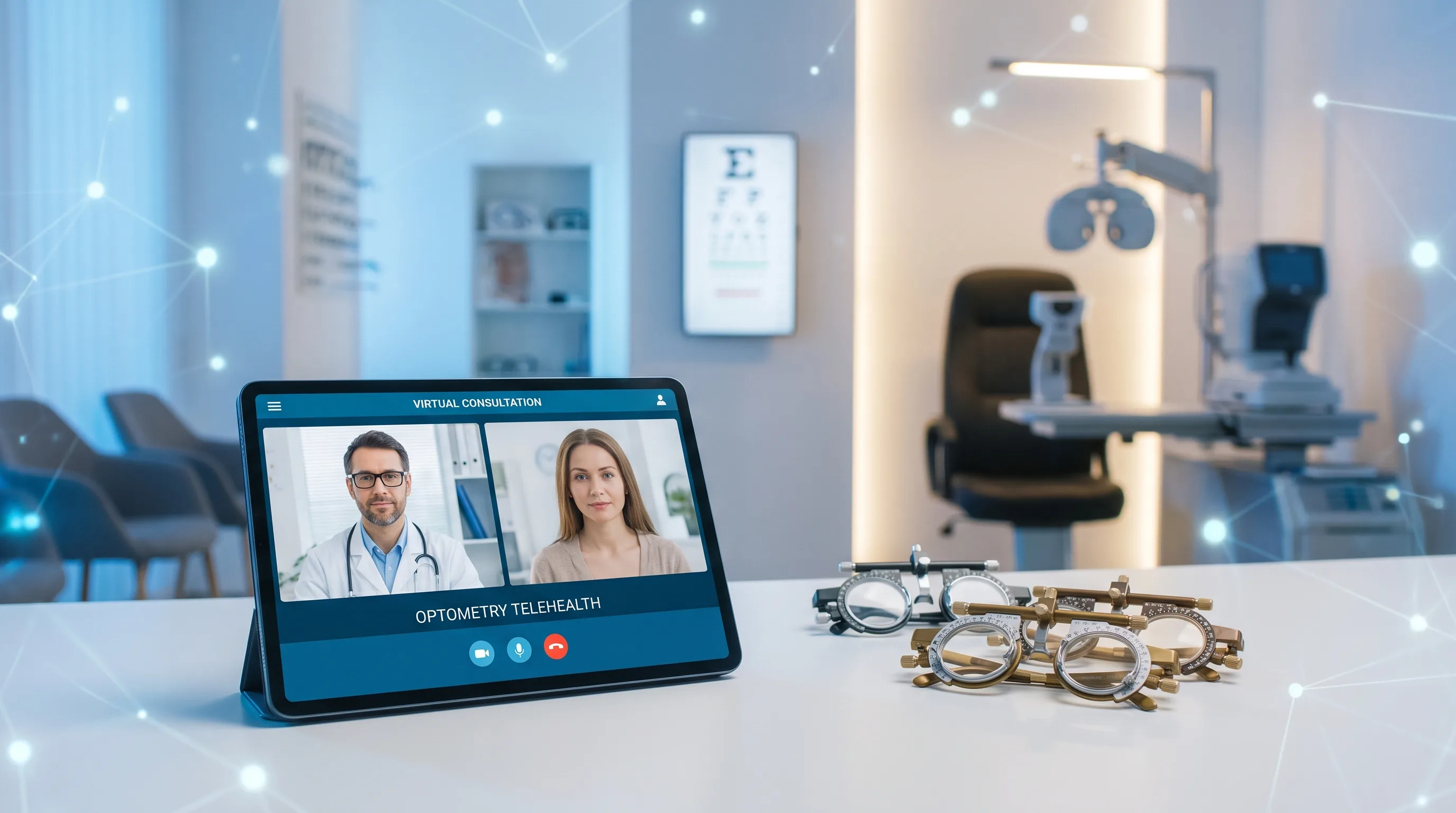
Telehealth has changed the way patients interact with healthcare providers. But in optometry, where much of care depends on in-person examinations and specialized equipment, where does virtual care actually fit?
The answer isn’t replacing the eye exam. It’s finding opportunities to make care more accessible, connected, and convenient.
The American Optometric Association (AOA) supports the appropriate use of telemedicine in optometry and recognizes its potential to improve access, communication, and coordination of care. (aoa.org)
What Can Telehealth Do in Optometry?
Not every part of eye care belongs online. A comprehensive eye examination requires clinical evaluation and testing that may require specialized equipment and an in-person visit.
But there are other parts of the patient journey where technology can be useful.
Depending on the patient’s needs, telehealth may support:
- Follow-up care – Communicate with patients after an appointment or discuss ongoing concerns.
- Patient education – Provide information and guidance without requiring another office visit.
- Care coordination – Help eye care providers communicate with patients and other healthcare professionals.
- Remote monitoring – Collect health information between visits when appropriate technology is available.
- Access to care – Give patients another way to connect with their provider when distance, transportation, or scheduling creates challenges.
The AOA specifically identifies real-time patient connections and remote monitoring as areas where telemedicine can support optometric care. (aoa.org)
Remote Monitoring Is One Area to Watch
Connected health technology could make it easier to collect information outside the traditional exam room.
The Centers for Medicare & Medicaid Services defines remote patient monitoring as the collection and transmission of patient-generated health data through connected devices for use in managing a patient’s condition. (cms.gov)
As connected technology develops, remote monitoring could create additional opportunities in eye care. But practices should evaluate each technology carefully, including its evidence, intended use, privacy requirements, and regulatory status.
Don’t Forget the Patient Experience
Telehealth doesn’t always have to mean a virtual clinical visit.
Sometimes, technology simply makes communication easier.
Patients may need to ask a question, provide information, or follow up with their care team without scheduling another in-person appointment. Digital communication can make those interactions more convenient while keeping the practice connected to the patient.
The AOA identifies communication and coordination as potential benefits of telemedicine. (aoa.org)
Quality and Privacy Still Matter
Convenience can’t come at the expense of patient care.
The AOA states that the standard of care should remain consistent regardless of whether care is delivered in person, remotely, or through a combination of approaches. (aoa.org)
Privacy is another important consideration. The FTC and HHS have warned healthcare organizations and telehealth providers about privacy and security risks associated with online tracking technologies. (ftc.gov)
Before adopting a telehealth platform, practices should consider security, privacy, regulatory requirements, and how patient information is handled.
Finding the Right Balance
Telehealth doesn’t need to transform an optometry practice overnight.
Instead, practices can start by identifying parts of the patient experience that could be improved through technology.
Could a follow-up happen virtually?
Could patients communicate more easily between visits?
Could remote monitoring provide useful information?
Could technology make care more accessible for certain patients?
Those are the questions worth asking.
The future of optometry probably isn’t entirely virtual—or entirely in person. It’s a combination of both.
The exam room will remain an essential part of eye care. But the right technology can help practices stay connected with patients before, between, and after those visits.
Sources
- American Optometric Association – AOA Policy Statement on Telemedicine in Optometry (aoa.org)
- American Optometric Association – How the Updated Position Statement Can Help Guide Telemedicine in Optometry (aoa.org)
- Centers for Medicare & Medicaid Services – Remote Patient Monitoring (cms.gov)
- Federal Trade Commission & HHS – Privacy and Security Risks for Telehealth Providers (ftc.gov)